Some events are so momentous that pictures truly do speak louder than words.
Apollo 11, the 50th Anniversary (Part 2 of 3): The Photographs
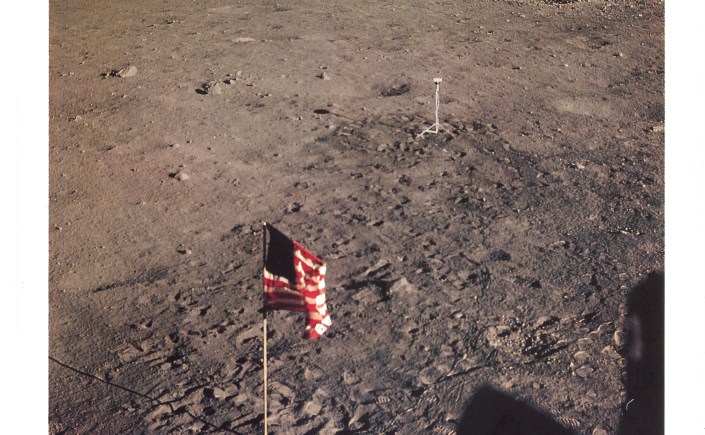
Some events are so momentous that pictures truly do speak louder than words.
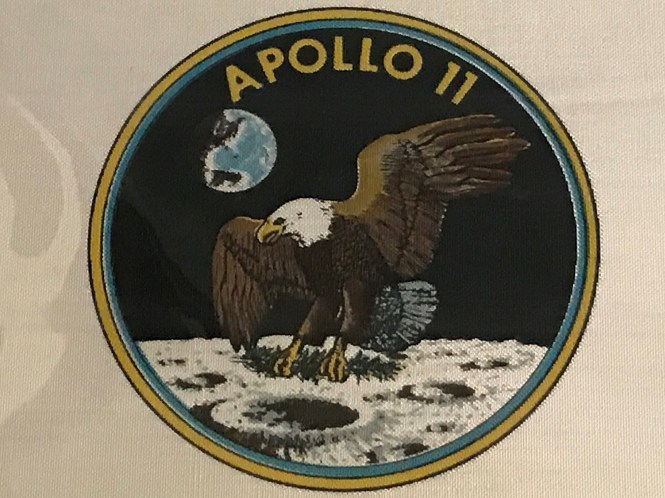
Fifty years ago today, three brave Americans blasted off from Cape Canaveral, Florida. They were undertaking a challenging adventure, which only the American people have accomplished to this date. Neil Armstrong was the mission commander, a former Naval Aviator and test pilot. A veteran of the Korean War, he was previously the command pilot of the Gemini 8 mission. Joining him in the lunar module named Eagle, was Air Force officer and fighter pilot Edwin “Buzz” Aldrin Jr. “Buzz” Aldrin was also a veteran of the Korean War, having been credited with two aerial victories over communist MiG-15s. He had previously flown into space on the Gemini 12 mission. On the command module, Columbia, was Air Force officer and test pilot Michael Collins, a veteran of the Gemini 10 mission. The mission patches – like the exterior of the white space suits – from Apollo 11 were made from a “space age material” called beta cloth.
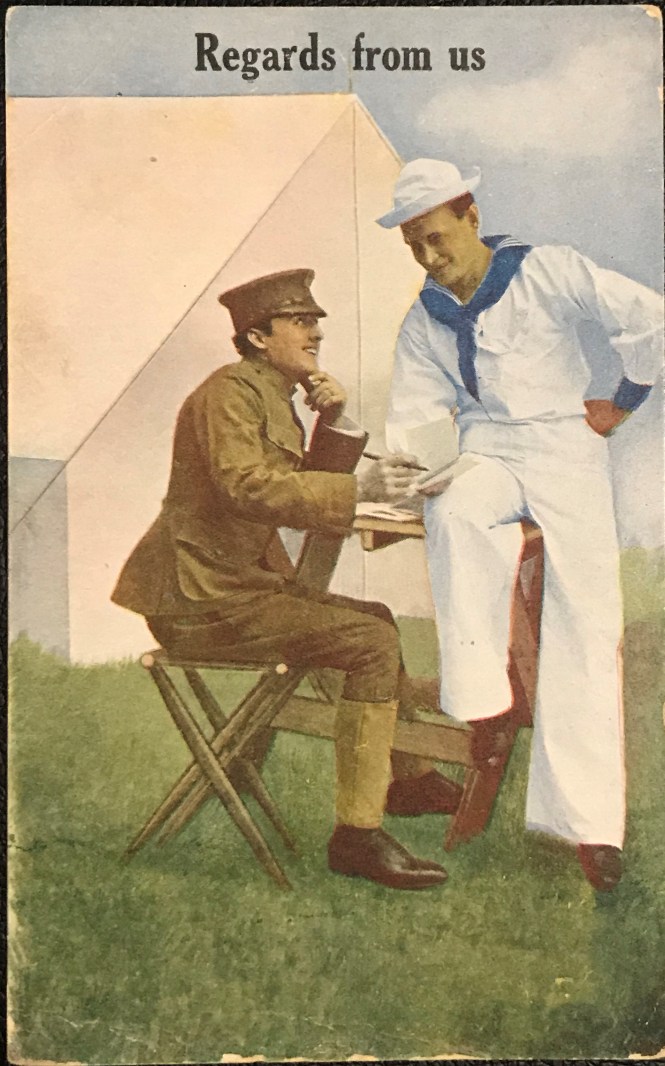
I found this postcard in an antique shop years ago. I bought it for the image on the front, but on the back is a part of a letter, the top of the “page” marked “2.” Contextually, I believe it to be a “love letter” to a sailor named Fred. Sometimes we can skip the in depth history and just make that personal connection to people from decades (even centuries ago.
A special series of three consecutive blog posts will be departing from the militaria focus of the blog this month. Part 1 will launch on July 16 at 13:32 UTC. Check out the “teaser image” for a hint!

On June 6, 1944, Lieutenant Junior Grade John Golden took off from Camp Kearney, California in the PB4Y-1 Liberator named Pistol Packin’ Mama. Pistol Packin’ Mama was a former Army Air Forces B-24D Liberator with the tail number 42-40711 assigned to VB-117. Weather was overcast, with flights restricted to Instrument Flight Rules (IFR) only. LT Golden did not carry out special IFR procedures. It is precisely uncertain how the pilot maneuvered in the moments following, although the Liberator broke through the cloud cover between Camp Miramar and Camp Kearney. He reentered the overcast and came out of the cloud cover again in a steep dive at 100 feet above ground level over Camp Linda Vista. Attempting to recover from this dive, the pilot reentered the overcast in a climb on a northwesterly heading. Reappearing below the cloud cover, the plane was rocking from side to side in a power stall. The left wing hit the ground, with the plane bounding through trees and buildings. Coming to a final rest, a fuel explosion occurred, launching the tail section over the remainder of the fuselage. The only three survivors in the crew of 12 were in the tail section and suffered severe injuries. Along the path of destruction was the supply hut of VB-102. Nine members of VB-102 were killed with eleven more seriously injured. [1] Among those killed in VB-102’s supply hut was Aviation Chief Ordnanceman Edward Ralph Lamberton.
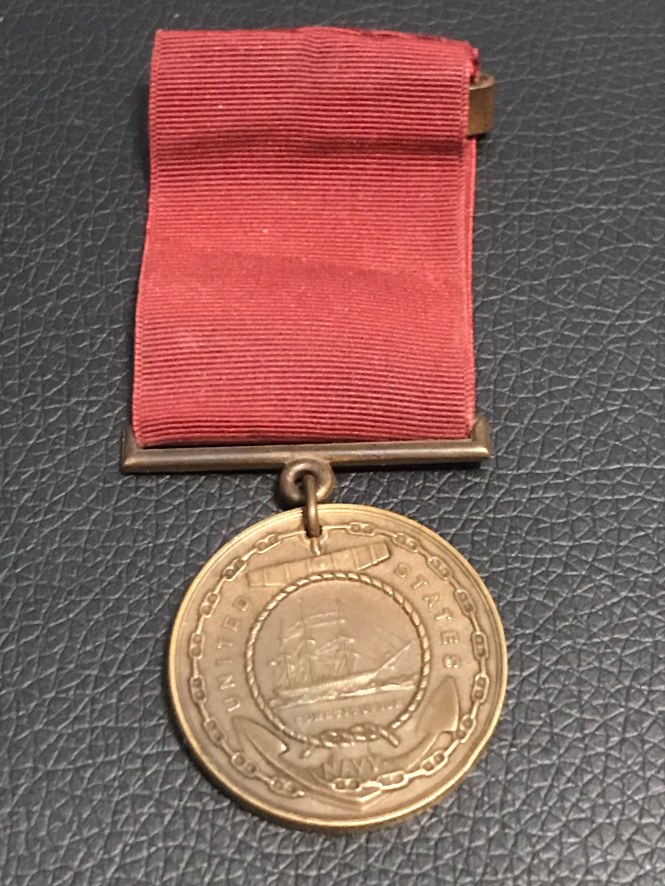
 The Things We Leave Behind