Apollo 11, the 50th Anniversary (Part 1 of 3): The Mission Patch

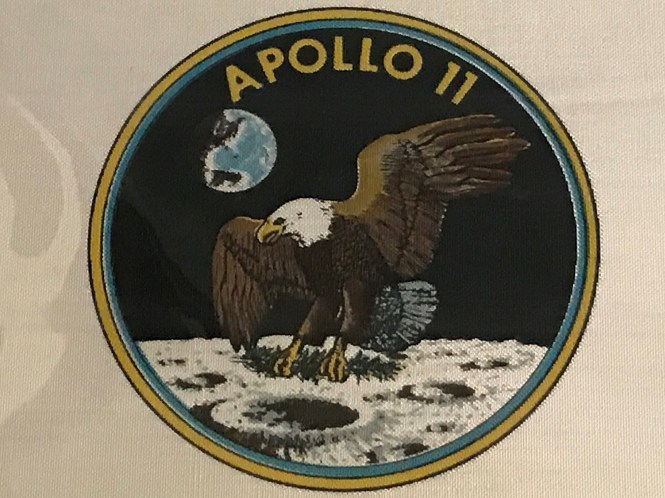
Fifty years ago today, three brave Americans blasted off from Cape Canaveral, Florida.  They were undertaking a challenging adventure, which only the American people have accomplished to this date.  Neil Armstrong was the mission commander, a former Naval Aviator and test pilot.  A veteran of the Korean War, he was previously the command pilot of the Gemini 8 mission.  Joining him in the lunar module named Eagle, was Air Force officer and fighter pilot Edwin “Buzz” Aldrin Jr.  “Buzz” Aldrin was also a veteran of the Korean War, having been credited with two aerial victories over communist MiG-15s.  He had previously flown into space on the Gemini 12 mission.  On the command module, Columbia, was Air Force officer and test pilot Michael Collins, a veteran of the Gemini 10 mission.  The mission patches – like the exterior of the white space suits – from Apollo 11 were made from a “space age material” called beta cloth.
IMG_8125

Continue reading

The Love Note

Postcard_Front

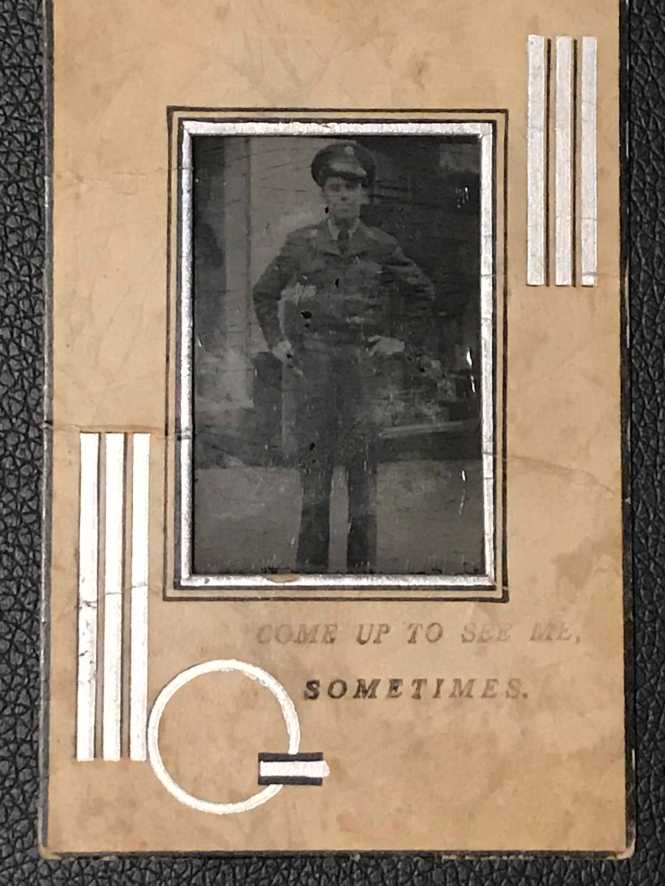
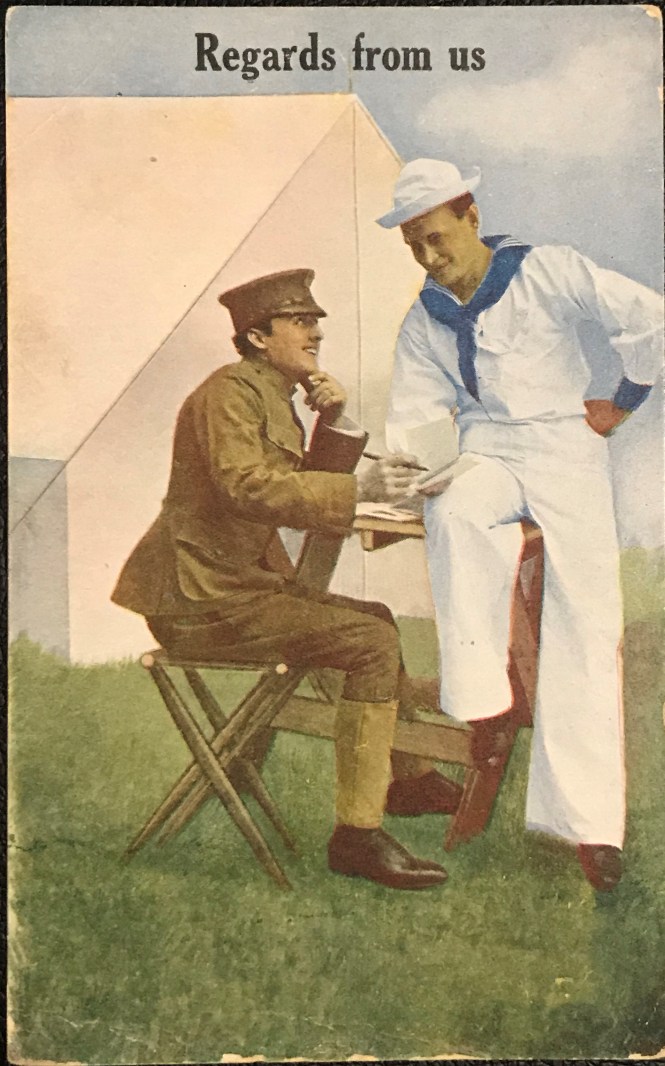
I found this postcard in an antique shop years ago.  I bought it for the image on the front, but on the back is a part of a letter, the top of the “page” marked “2.”  Contextually, I believe it to be a “love letter” to a sailor named Fred.  Sometimes we can skip the in depth history and just make that personal connection to people from decades (even centuries ago.

Continue reading

The Chief’s Good Conduct Medal & Tragic Death

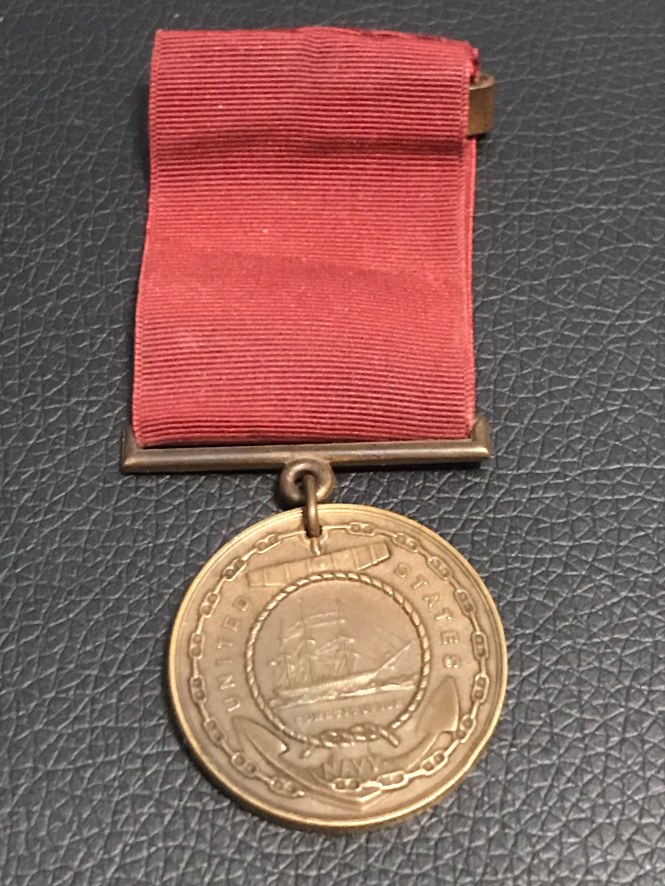
On June 6, 1944, Lieutenant Junior Grade John Golden took off from Camp Kearney, California in the PB4Y-1 Liberator named Pistol Packin’ MamaPistol Packin’ Mama was a former Army Air Forces B-24D Liberator with the tail number 42-40711 assigned to VB-117.  Weather was overcast, with flights restricted to Instrument Flight Rules (IFR) only.  LT Golden did not carry out special IFR procedures.  It is precisely uncertain how the pilot maneuvered in the moments following, although the Liberator broke through the cloud cover between Camp Miramar and Camp Kearney.  He reentered the overcast and came out of the cloud cover again in a steep dive at 100 feet above ground level over Camp Linda Vista.  Attempting to recover from this dive, the pilot reentered the overcast in a climb on a northwesterly heading.  Reappearing below the cloud cover, the plane was rocking from side to side in a power stall.  The left wing hit the ground, with the plane bounding through trees and buildings.  Coming to a final rest, a fuel explosion occurred, launching the tail section over the remainder of the fuselage.  The only three survivors in the crew of 12 were in the tail section and suffered severe injuries.  Along the path of destruction was the supply hut of VB-102.  Nine members of VB-102 were killed with eleven more seriously injured. [1] Among those killed in VB-102’s supply hut was Aviation Chief Ordnanceman Edward Ralph Lamberton.

IMG_8096

Continue reading

The Lieutenant and the Century Old Challenge Coins

Military challenge coins are among the most treasured and prized recognition a Soldier, Sailor, Airman or Marine can receive. Katie Lange of the Defense Media Activity describes challenge coins as, “an American military tradition for a century, meant to instill unit pride, improve esprit de corps and reward hard work and excellence.” [1] Military challenge coins are steeped in legend and lore, but what is the hard truth behind their origins?

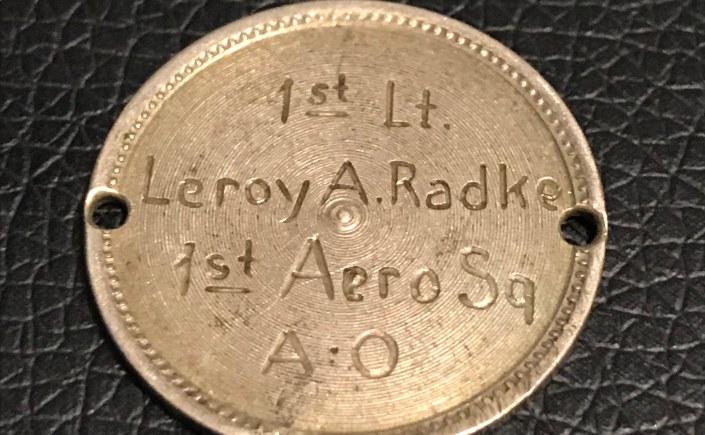
One of my personal favorite stories is that it originated with a Lieutenant in the Army Air Service during the First World War.  I’ve heard two versions of this story, which exists only as an oral tradition.

Continue reading

In Pursuit of a Commission….

The medals were unnamed, but the grouping came with extensive paperwork attributing them to John George Ward, Jr.  A man whose story is full of courage and sacrifice, but also serves as an example of how chance guides you towards your destiny.

IMG_8051

John G. Ward, Jr. as an enlisted soldier

To put a significant part of this story into context, for the non-veteran, the officer’s commission must be put into context.  Commissioned officers make up approximately 10% of the U.S. military.  The commissioned officer’s authority is derived from Article II, Section 3 of the U.S. Constitution.  Supreme Court Justice John Marshall wrote in 1803, “granting a commission is the distinct act, done in the name of the President, which empowers an officer.” [1]

Continue reading

The United Spanish War Veteran’s Medals

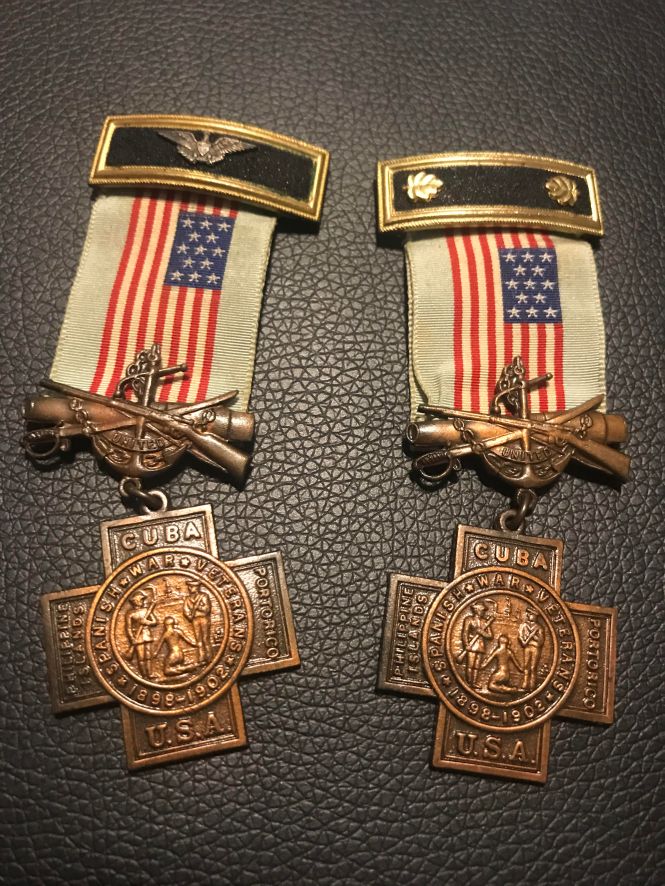
USWV_Medals_ObverseThe Spanish-American War has an interesting role in the greater scope of the American experience.   The Civil War was a generational conflict, defining multiple citizen’s experience of conflict.  Entire towns were virtually emasculated as their sons and fathers died by the scores.  The Spanish-American War though, was by comparison short and relatively bloodless.  The impact of the Spanish-American War on society was influential, providing the children of Union and Confederate soldiers to fight side by side.
 

Continue reading

The Decorated Musician

Cased_Medal

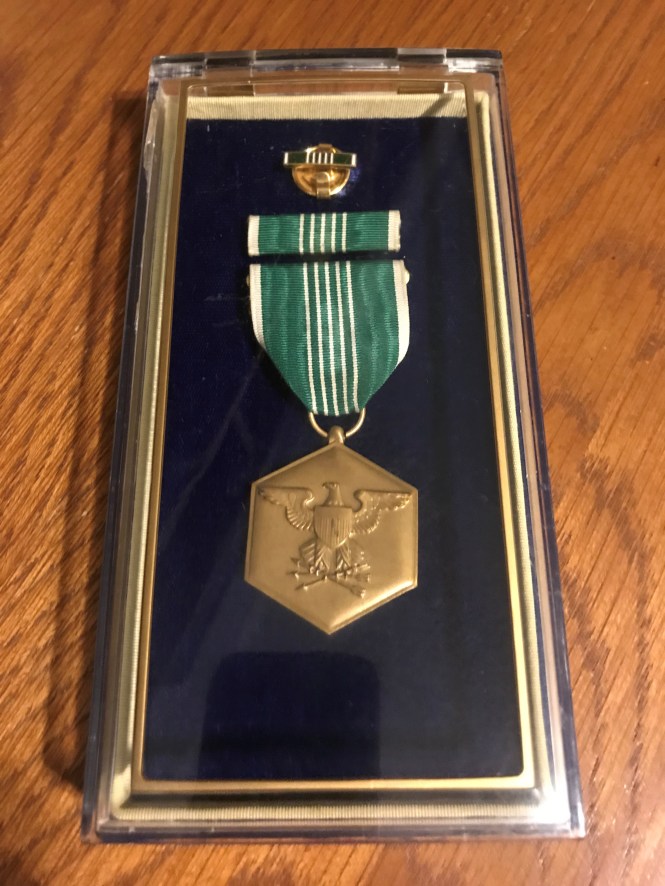
Senior Master Sergeant Cedric V. Smith was presented the Air Force Commendation Medal by Lieutenant General Walter Todd on his retirement after 31 years of military service on August 31, 1960.  But this was not the first time the talented musician who had rose to lead the 604th Air Force Band as Bandmaster. [1] As a Master Sergeant, he was awarded the Army Commendation Medal at an earlier point in his career.*  The military is a cross section of society, and while few civilians would believe the value the military places on musicians, the recognition SMSgt Cedric Smith received is hard evidence against that misconception.

Continue reading

Who will remember me, when I’m gone?

On November 11, 1919, President Woodrow Wilson dedicated Armistice Day, which would later evolve into the modern National holiday Veteran’s Day with these words.  “To us in America, the reflections of Armistice Day will be filled with lots of pride in the heroism of those who died in the country’s service and with gratitude for the victory, both because of the thing from which it has freed us and because of the opportunity it has given America to show her sympathy with peace and justice in the councils of the nations.”  But across the nation, families were mourning their lost loved ones.

IMG_7144

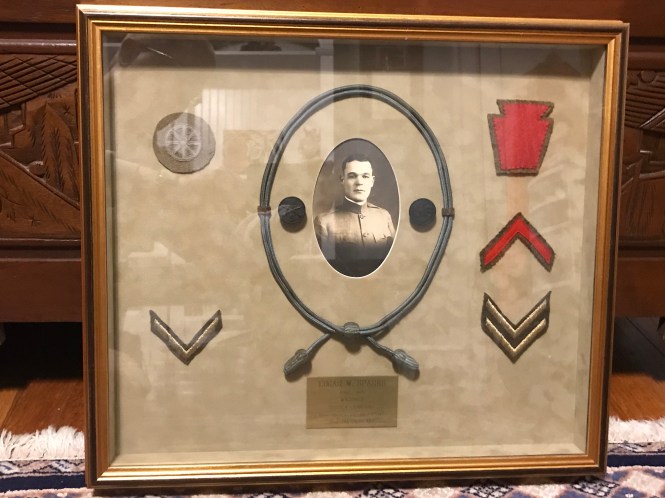
When I first found this shadow box in an antiques store in Lewisville, Texas; my thought was “Who will remember Wagoner Edgar Sparks, a century after he gave his life for his country?”  As I began to research Edgar’s life, I realized the story was much more nuanced than that initial thought.

Continue reading

When the Name Tag tells the Bronze Star’s Story

img_6704

The Bronze Star Medal held a nice beautiful chocolate patina and was in a pristine plastic presentation case from the 1950s and 1960s era.  It was eye catching, with the initials D.C.K. engraved on the back.  This would have meant the recipient would have been unknown and lost to time.  Except for the metal U.S. Air Force name tag to D. C. Kipfer with the Warfare Systems School insignia pointed to an exceptional Air Force Colonel’s Service that spanned from World War II through the Vietnam conflict.  What initially looked to be a story of a singular wartime achievement instead told a story of a man whose contributions in Research & Development had greater strategic impact on the United States Air Force.  This is Colonel Donald C. Kipfer’s story of service.

Continue reading