
Merry Christmas from “The Things We Leave Behind!” This holiday posting is in honor of the 11th Cavalry Regiment, now known as the “Black Horse” or 11th Armored Cavalry Regiment in the U.S. Army.
Merry Christmas from “The Things We Leave Behind!” This holiday posting is in honor of the 11th Cavalry Regiment, now known as the “Black Horse” or 11th Armored Cavalry Regiment in the U.S. Army.
When the guns fall silent, and the war ends, sometimes warriors from opposing sides meet without animosity. Private Sward, of the 726th Medical Detachment, 71st Medical Battalion documented one such firsthand account of a Japanese soldier during the Battle of Okinawa in a letter home on December 14, 1945.

The medals were unnamed, but the grouping came with extensive paperwork attributing them to John George Ward, Jr. A man whose story is full of courage and sacrifice, but also serves as an example of how chance guides you towards your destiny.
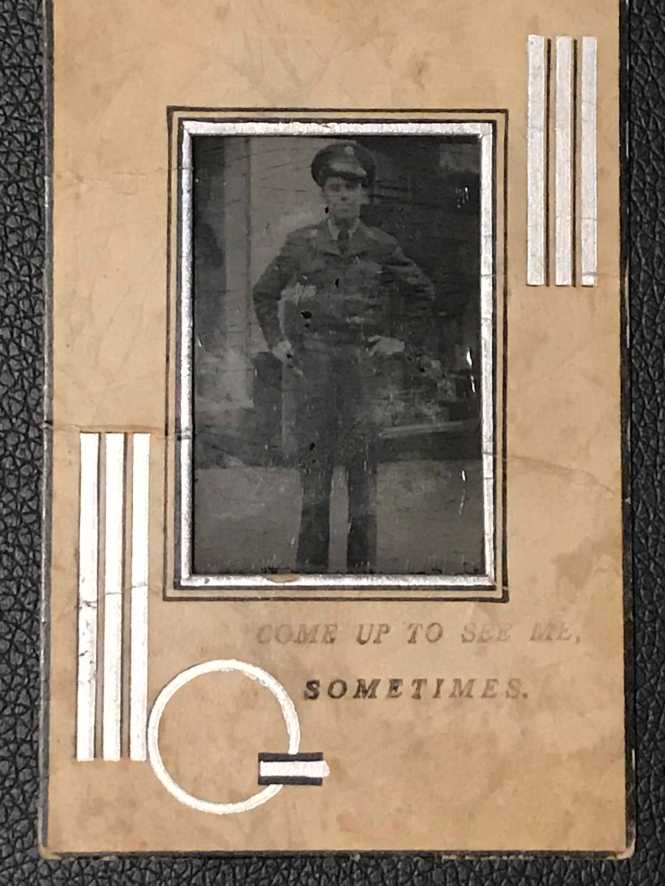
John G. Ward, Jr. as an enlisted soldier
To put a significant part of this story into context, for the non-veteran, the officer’s commission must be put into context. Commissioned officers make up approximately 10% of the U.S. military. The commissioned officer’s authority is derived from Article II, Section 3 of the U.S. Constitution. Supreme Court Justice John Marshall wrote in 1803, “granting a commission is the distinct act, done in the name of the President, which empowers an officer.” [1]
On November 11, 1919, President Woodrow Wilson dedicated Armistice Day, which would later evolve into the modern National holiday Veteran’s Day with these words. “To us in America, the reflections of Armistice Day will be filled with lots of pride in the heroism of those who died in the country’s service and with gratitude for the victory, both because of the thing from which it has freed us and because of the opportunity it has given America to show her sympathy with peace and justice in the councils of the nations.” But across the nation, families were mourning their lost loved ones.
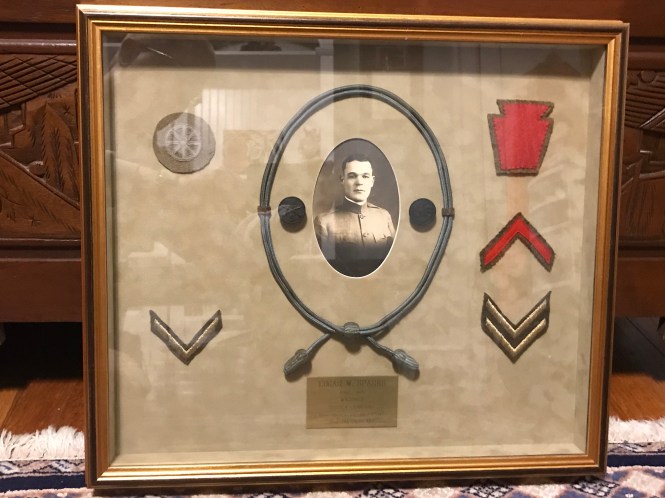
When I first found this shadow box in an antiques store in Lewisville, Texas; my thought was “Who will remember Wagoner Edgar Sparks, a century after he gave his life for his country?” As I began to research Edgar’s life, I realized the story was much more nuanced than that initial thought.
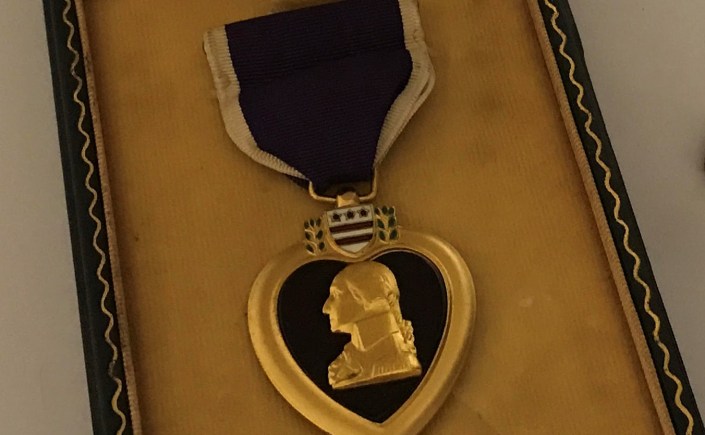
It has been the study of the “great men” which most historians have focused on. The generals (such as George Patton) who guided armies (such as Third Army) through pivotal moments in great wars have been the focus of most historians’ studies. But among those armies are the microhistories which have shown relatively “minor” men can leave their fingerprints on the course of humanity. The artifacts left behind are evidence of these microhistories. Personally, I feel a calling to tell these stories of my brothers in arms. One such calling hit me on our family vacation last week. The Purple Heart that belonged to Private Royal Gaunt spoke to me from the moment I first saw it. This is the story that emerged from that near seventy year old medal.
Technology has permitted us to capture history in the words of those who lived it! I first met COL Ben when I was a cadet at Clemson. I first heard his “Ring Story” firsthand from his own mouth. It added significantly more weight to the ring I wear daily on my right hand. On his 100th birthday, I can think of no more fitting tribute than sharing his story, in his own words.
COL Skardon is a national treasure, and I am humbled to be following in his footsteps as part of the “long orange line” of Clemson officers.
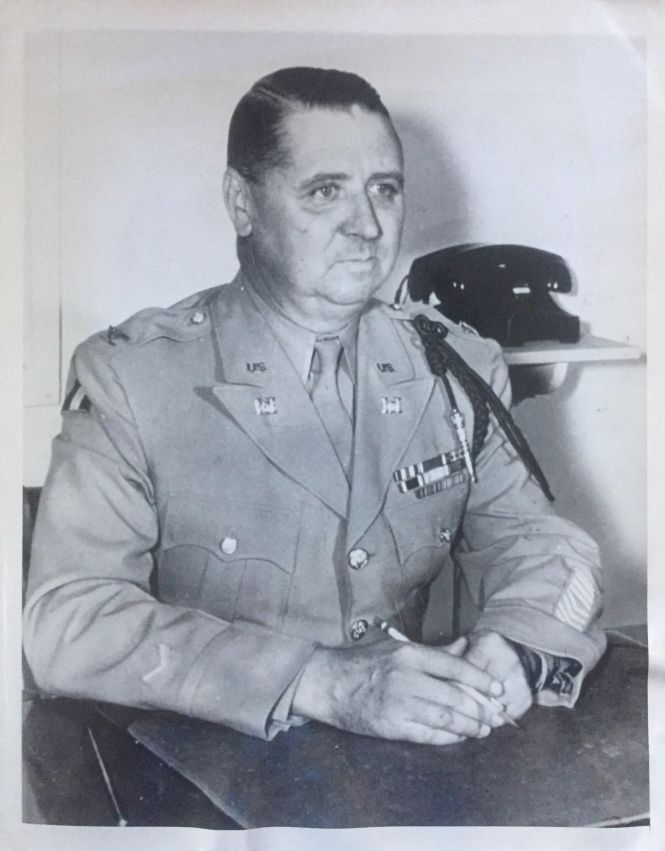
The photo is an old Associated Press photo with the caption typed on a piece of paper glued and taped to the back which reads:
“COL. GERALD R. TYLER, COMMANDANT OF THE SECRET ATOMIC BOMB PROJECT AT LOS ALAMOS, N.M., IS SHOWN AT HIS DESK AT THE OFFICES LOCATED IN MOUNTAINOUS TERRAIN 30 MILES NORTWEST OF SANTA FE.”
But, what isn’t told is the link this photo has to an ROTC legend at my alma mater…..

One thing I have been dealing with during my absence on the blog is the passing of my Grandfather, Fred Brock. Of all the things he left behind, one had special significance to me and it was the one thing I asked for after he passed. His shadow box.
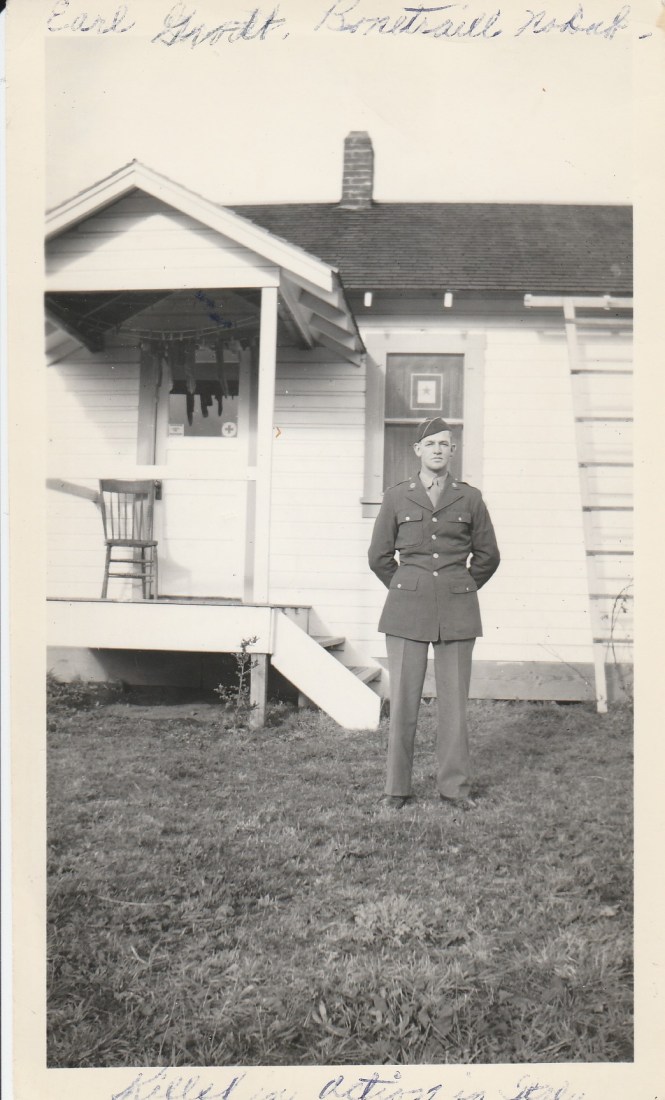
The soldier proudly stands at Parade Rest in his finest dress uniform. A “Son in Service” flag proudly hangs in the window of the house. The words written on the photo though is what drove this research into the life of the man in the photo though.
“Earl Grodt, Bonetraill, No Dak”
“Killed in Action in Italy”
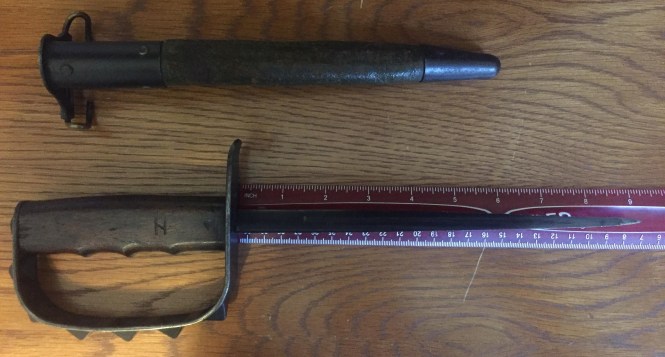
It is the kind of horrific weapon only a war can produce. The blade is triangular in shape and extends slightly over 9 inches from the hand guard. It is crafted to pierce clothing and leather with ease, and easily penetrate deeper in the man beneath those clothes with minimal friction on the blade. The guard extends around the wooden grip, with raised triangular knobs to focus the pressure of a punch with bone crushing results while protecting the hand. It is a Model 1917 Trench Knife. And despite its horrific capabilities, the men of the American Expeditionary Force (AEF) found it lacking in combat efficiency.
 The Things We Leave Behind