
Merry Christmas from “The Things We Leave Behind!” This holiday posting is in honor of the 11th Cavalry Regiment, now known as the “Black Horse” or 11th Armored Cavalry Regiment in the U.S. Army.
Merry Christmas from “The Things We Leave Behind!” This holiday posting is in honor of the 11th Cavalry Regiment, now known as the “Black Horse” or 11th Armored Cavalry Regiment in the U.S. Army.
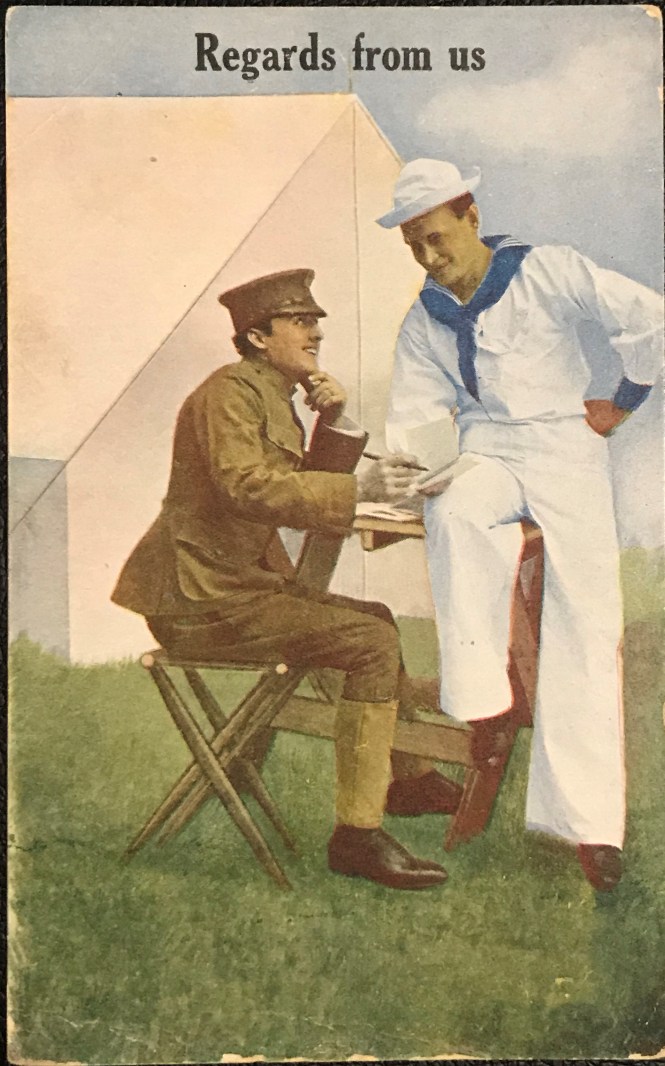
I found this postcard in an antique shop years ago. I bought it for the image on the front, but on the back is a part of a letter, the top of the “page” marked “2.” Contextually, I believe it to be a “love letter” to a sailor named Fred. Sometimes we can skip the in depth history and just make that personal connection to people from decades (even centuries ago.
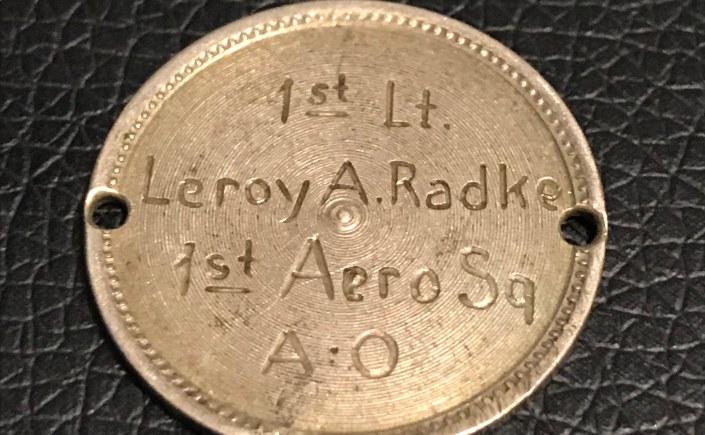
Military challenge coins are among the most treasured and prized recognition a Soldier, Sailor, Airman or Marine can receive. Katie Lange of the Defense Media Activity describes challenge coins as, “an American military tradition for a century, meant to instill unit pride, improve esprit de corps and reward hard work and excellence.” [1] Military challenge coins are steeped in legend and lore, but what is the hard truth behind their origins?
One of my personal favorite stories is that it originated with a Lieutenant in the Army Air Service during the First World War. I’ve heard two versions of this story, which exists only as an oral tradition.
On November 11, 1919, President Woodrow Wilson dedicated Armistice Day, which would later evolve into the modern National holiday Veteran’s Day with these words. “To us in America, the reflections of Armistice Day will be filled with lots of pride in the heroism of those who died in the country’s service and with gratitude for the victory, both because of the thing from which it has freed us and because of the opportunity it has given America to show her sympathy with peace and justice in the councils of the nations.” But across the nation, families were mourning their lost loved ones.
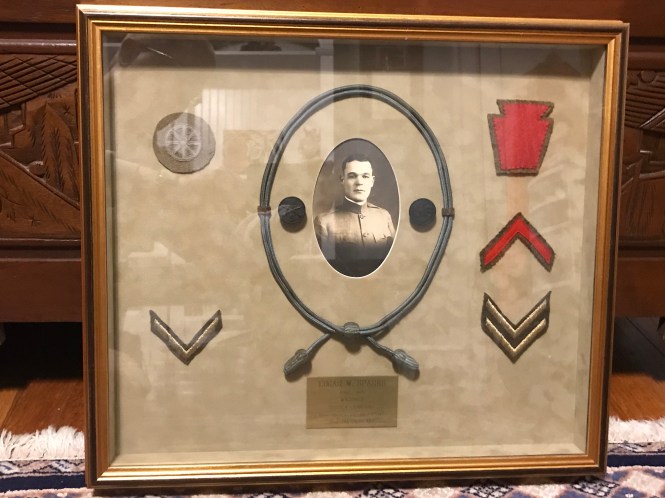
When I first found this shadow box in an antiques store in Lewisville, Texas; my thought was “Who will remember Wagoner Edgar Sparks, a century after he gave his life for his country?” As I began to research Edgar’s life, I realized the story was much more nuanced than that initial thought.
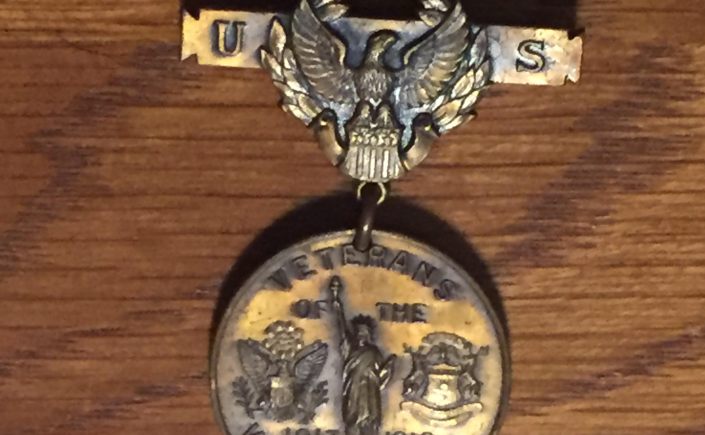
This artifact tells two stories: The first, of a man who served his nation in the First World War. The second, how communities decided to honor those who served before the widespread adoption of service medals by the U.S. military.
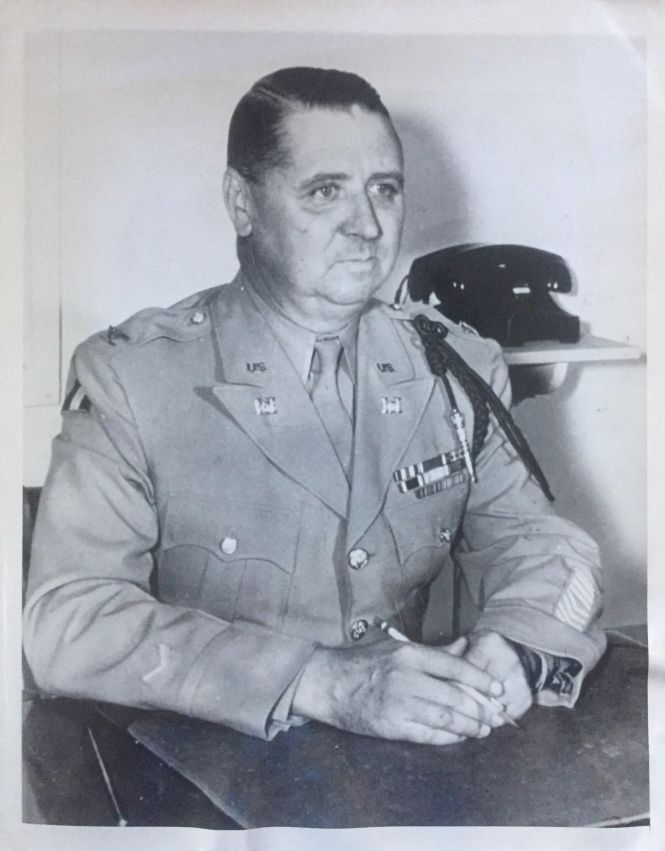
The photo is an old Associated Press photo with the caption typed on a piece of paper glued and taped to the back which reads:
“COL. GERALD R. TYLER, COMMANDANT OF THE SECRET ATOMIC BOMB PROJECT AT LOS ALAMOS, N.M., IS SHOWN AT HIS DESK AT THE OFFICES LOCATED IN MOUNTAINOUS TERRAIN 30 MILES NORTWEST OF SANTA FE.”
But, what isn’t told is the link this photo has to an ROTC legend at my alma mater…..
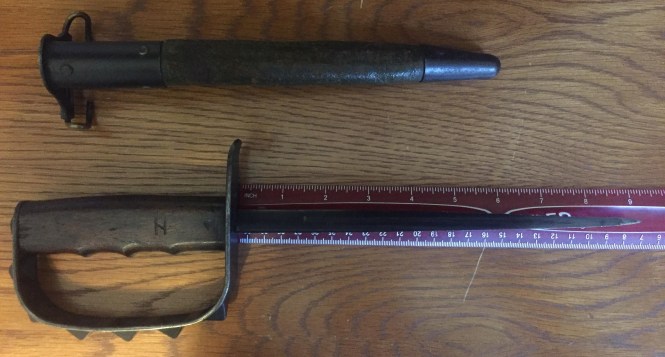
It is the kind of horrific weapon only a war can produce. The blade is triangular in shape and extends slightly over 9 inches from the hand guard. It is crafted to pierce clothing and leather with ease, and easily penetrate deeper in the man beneath those clothes with minimal friction on the blade. The guard extends around the wooden grip, with raised triangular knobs to focus the pressure of a punch with bone crushing results while protecting the hand. It is a Model 1917 Trench Knife. And despite its horrific capabilities, the men of the American Expeditionary Force (AEF) found it lacking in combat efficiency.

Her name is lost to time, but I find this photo captivating. It was used on a German post card in World War I, but why was she in the uniform? Was it her boyfriend’s, her brother’s, or her husband’s?
The visor on the hat and the saber indicates this is likely an officer’s uniform. The soldier was a valiant man, the ribbon in the second button hole indicates award of the Iron Cross 2nd Class for combat. The non-combat version of that award would have had two black stripes on a white ribbon. Below her left breast is the Iron Cross 1st Class.
 The Things We Leave Behind