
Merry Christmas from “The Things We Leave Behind!” This holiday posting is in honor of the 11th Cavalry Regiment, now known as the “Black Horse” or 11th Armored Cavalry Regiment in the U.S. Army.
Merry Christmas from “The Things We Leave Behind!” This holiday posting is in honor of the 11th Cavalry Regiment, now known as the “Black Horse” or 11th Armored Cavalry Regiment in the U.S. Army.
 The mission was supposed to have been cancelled at the last minute. The Germans had moved anti-aircraft guns from Budapest to Vienna because of the Russian advance in the East. But, Brigadier General George R. Acheson, the commander of the 55th Bomb Wing decided the mission to Vienna was worth the risks and losses. [1] The weather was poor, forcing the bombers to fly at 16,000 feet instead of the typical 22,000 – 24,000 feet altitude. [2]
The B-24 Liberators of the 780th Bombardment Squadron were in formation flying into the heavy flak. The B-24 flown by Lieutenant Richard C. Klug took a direct hit from flak, causing the bomb bay to burst into flame, members of the crew bailing out while the airplane disintegrated in the air. The formation continued on to the target. [3] The B-24 piloted by Lieutenant Everett Steiner dropped their bomb load. In his typewritten, confidential after action report, Lieutenant Steiner described the moments following the bomb run succinctly. “The formation had just dropped its bombs and we were losing altitude rapidly and taking evasive action to clear the flak area as quickly as possible. Our ship received a hit in the No. 2 engine, and, after extreme difficulty, we brought the ship under control.” [4]

President Roosevelt authorized the Air Medal by Executive Order on May 11, 1942 “for award to any person who, while serving in any capacity in the Army, Navy, Marine Corps, or Coast Guard of the United States subsequent to September 8, 1939, distinguishes, or has distinguished, himself by meritorious achievement while participating in an aerial flight.” [1] It was amended in September of that year to read “….in any capacity in or with…” [2]
When the guns fall silent, and the war ends, sometimes warriors from opposing sides meet without animosity. Private Sward, of the 726th Medical Detachment, 71st Medical Battalion documented one such firsthand account of a Japanese soldier during the Battle of Okinawa in a letter home on December 14, 1945.

On June 6, 1944, Lieutenant Junior Grade John Golden took off from Camp Kearney, California in the PB4Y-1 Liberator named Pistol Packin’ Mama. Pistol Packin’ Mama was a former Army Air Forces B-24D Liberator with the tail number 42-40711 assigned to VB-117. Weather was overcast, with flights restricted to Instrument Flight Rules (IFR) only. LT Golden did not carry out special IFR procedures. It is precisely uncertain how the pilot maneuvered in the moments following, although the Liberator broke through the cloud cover between Camp Miramar and Camp Kearney. He reentered the overcast and came out of the cloud cover again in a steep dive at 100 feet above ground level over Camp Linda Vista. Attempting to recover from this dive, the pilot reentered the overcast in a climb on a northwesterly heading. Reappearing below the cloud cover, the plane was rocking from side to side in a power stall. The left wing hit the ground, with the plane bounding through trees and buildings. Coming to a final rest, a fuel explosion occurred, launching the tail section over the remainder of the fuselage. The only three survivors in the crew of 12 were in the tail section and suffered severe injuries. Along the path of destruction was the supply hut of VB-102. Nine members of VB-102 were killed with eleven more seriously injured. [1] Among those killed in VB-102’s supply hut was Aviation Chief Ordnanceman Edward Ralph Lamberton.
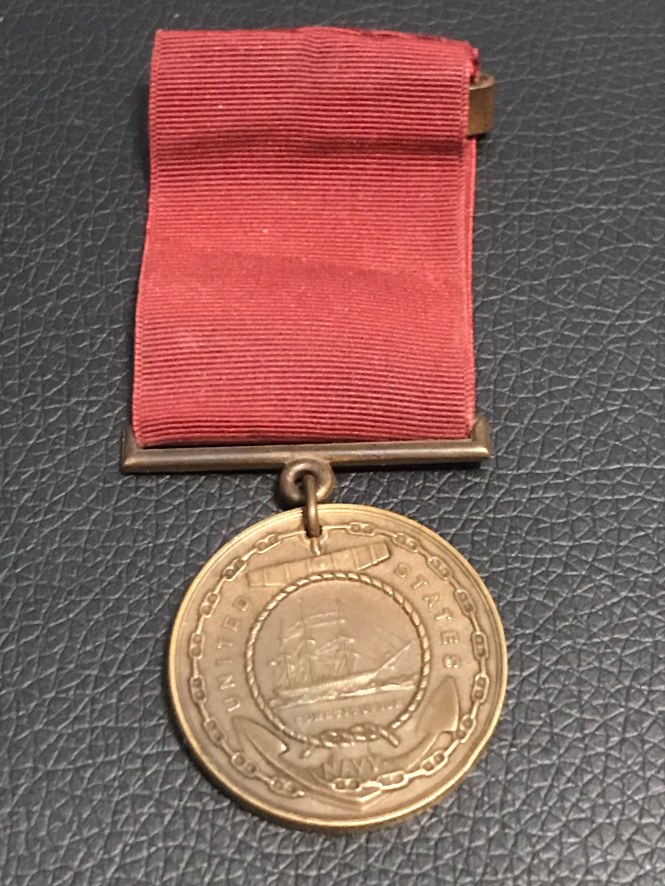
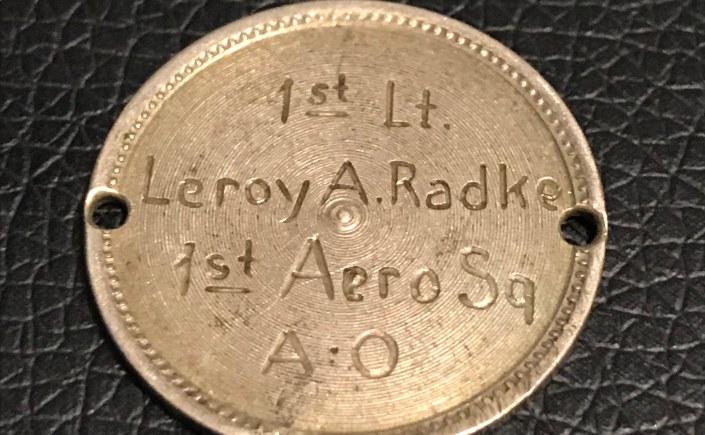
Military challenge coins are among the most treasured and prized recognition a Soldier, Sailor, Airman or Marine can receive. Katie Lange of the Defense Media Activity describes challenge coins as, “an American military tradition for a century, meant to instill unit pride, improve esprit de corps and reward hard work and excellence.” [1] Military challenge coins are steeped in legend and lore, but what is the hard truth behind their origins?
One of my personal favorite stories is that it originated with a Lieutenant in the Army Air Service during the First World War. I’ve heard two versions of this story, which exists only as an oral tradition.
The medals were unnamed, but the grouping came with extensive paperwork attributing them to John George Ward, Jr. A man whose story is full of courage and sacrifice, but also serves as an example of how chance guides you towards your destiny.
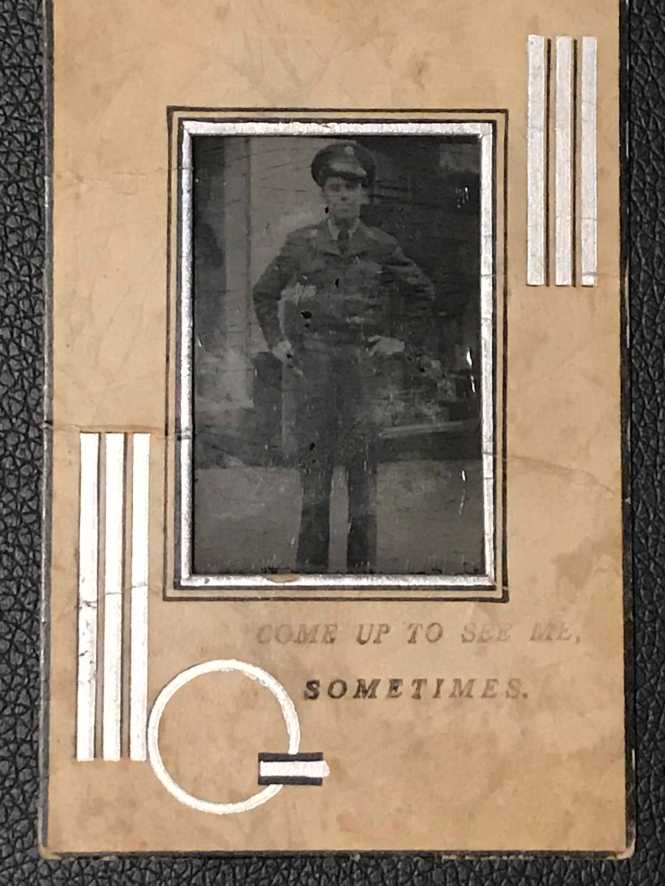
John G. Ward, Jr. as an enlisted soldier
To put a significant part of this story into context, for the non-veteran, the officer’s commission must be put into context. Commissioned officers make up approximately 10% of the U.S. military. The commissioned officer’s authority is derived from Article II, Section 3 of the U.S. Constitution. Supreme Court Justice John Marshall wrote in 1803, “granting a commission is the distinct act, done in the name of the President, which empowers an officer.” [1]
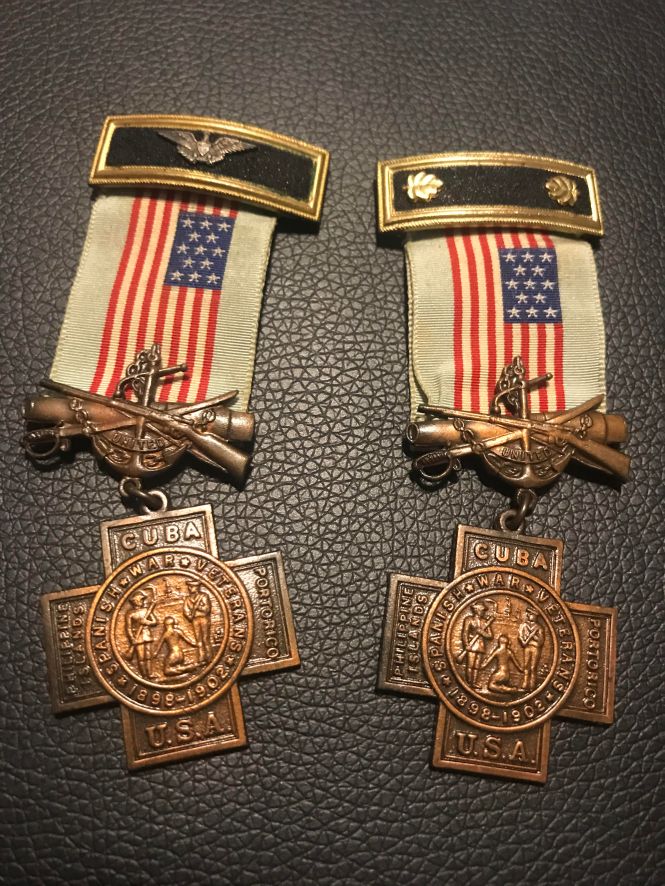 The Spanish-American War has an interesting role in the greater scope of the American experience. The Civil War was a generational conflict, defining multiple citizen’s experience of conflict. Entire towns were virtually emasculated as their sons and fathers died by the scores. The Spanish-American War though, was by comparison short and relatively bloodless. The impact of the Spanish-American War on society was influential, providing the children of Union and Confederate soldiers to fight side by side.
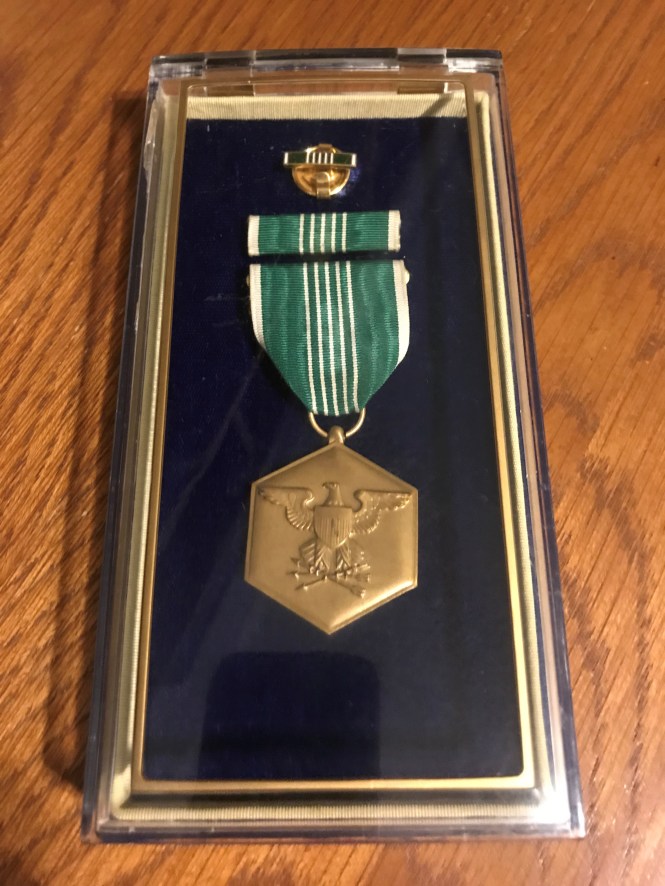
Senior Master Sergeant Cedric V. Smith was presented the Air Force Commendation Medal by Lieutenant General Walter Todd on his retirement after 31 years of military service on August 31, 1960. But this was not the first time the talented musician who had rose to lead the 604th Air Force Band as Bandmaster. [1] As a Master Sergeant, he was awarded the Army Commendation Medal at an earlier point in his career.* The military is a cross section of society, and while few civilians would believe the value the military places on musicians, the recognition SMSgt Cedric Smith received is hard evidence against that misconception.
On November 11, 1919, President Woodrow Wilson dedicated Armistice Day, which would later evolve into the modern National holiday Veteran’s Day with these words. “To us in America, the reflections of Armistice Day will be filled with lots of pride in the heroism of those who died in the country’s service and with gratitude for the victory, both because of the thing from which it has freed us and because of the opportunity it has given America to show her sympathy with peace and justice in the councils of the nations.” But across the nation, families were mourning their lost loved ones.
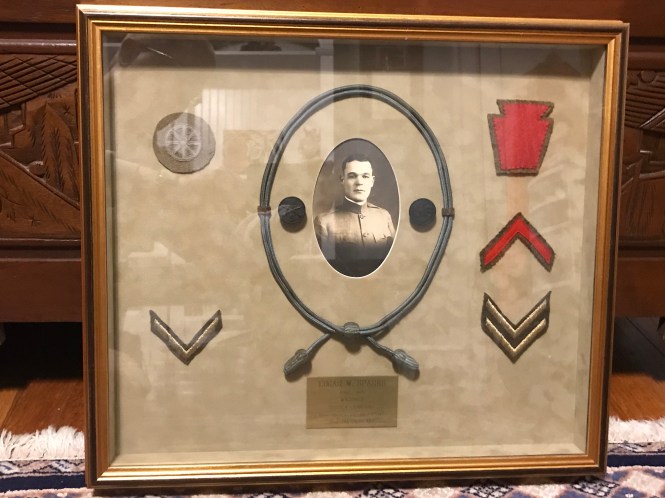
When I first found this shadow box in an antiques store in Lewisville, Texas; my thought was “Who will remember Wagoner Edgar Sparks, a century after he gave his life for his country?” As I began to research Edgar’s life, I realized the story was much more nuanced than that initial thought.
 The Things We Leave Behind