The Prisoner of War

His Last Mission of World War II
June 2013 PhotoThe mission was supposed to have been cancelled at the last minute.  The Germans had moved anti-aircraft guns from Budapest to Vienna because of the Russian advance in the East.  But, Brigadier General George R. Acheson, the commander of the 55th Bomb Wing decided the mission to Vienna was worth the risks and losses. [1] The weather was poor, forcing the bombers to fly at 16,000 feet instead of the typical 22,000 – 24,000 feet altitude. [2]

The B-24 Liberators of the 780th Bombardment Squadron were in formation flying into the heavy flak.  The B-24 flown by Lieutenant Richard C. Klug took a direct hit from flak, causing the bomb bay to burst into flame, members of the crew bailing out while the airplane disintegrated in the air.  The formation continued on to the target. [3] The B-24 piloted by Lieutenant Everett Steiner dropped their bomb load.  In his typewritten, confidential after action report, Lieutenant Steiner described the moments following the bomb run succinctly.  “The formation had just dropped its bombs and we were losing altitude rapidly and taking evasive action to clear the flak area as quickly as possible.  Our ship received a hit in the No. 2 engine, and, after extreme difficulty, we brought the ship under control.” [4]

Continue reading

The Larry Spencer Diary, Part 3: The Crash

IMG_9854

Christmas Day was on a Tuesday in 1945.  Early that morning – at about 9:00 A.M. – Jack Stearns Barrows and Gilbert Marvin Crolius left the Crolius residence telling Mrs. Crolius they were going to the airfield at Ontario, California to look at a plane which was for sale.  Gilbert Crolius worked for the American Airplane Company, while Jack worked for a lumber company.  Both boys, 17 years in age, had about 10 flight hours each as student pilots. Sometime after 1:00, the two boys took off from Ontario Field in a stolen C-47 “Skytrain.”  Eyewitnesses stated, “…after taking off, the plane gained altitude rapidly and suddenly went into a spin, diving almost straight down” crashing into a vineyard about 01:55. [1]

Continue reading

The Larry Spencer Diary, Part 2: The Women

IMG_9860bCorporal Lawrence “Larry” Spencer married Ms. Barbara Kelley in 1950, and remained married to her for 62 years until he passed away! [1] But, he was a bachelor during his service in the military.  And he enjoyed his leave, and a large portion of his diary is devoted to the women who left an impact on his life.  There appears to be a couple of pages torn from the journal, but the ladies that remain are listed below….
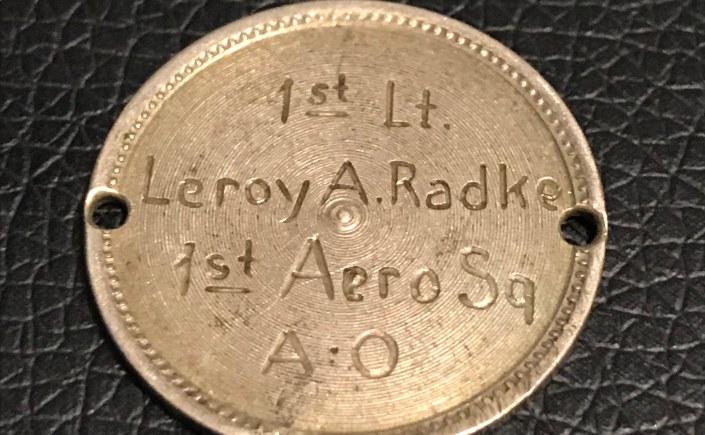
Continue reading

The Larry Spencer Diary, Part 1: His Service and His Pals

IMG_9848

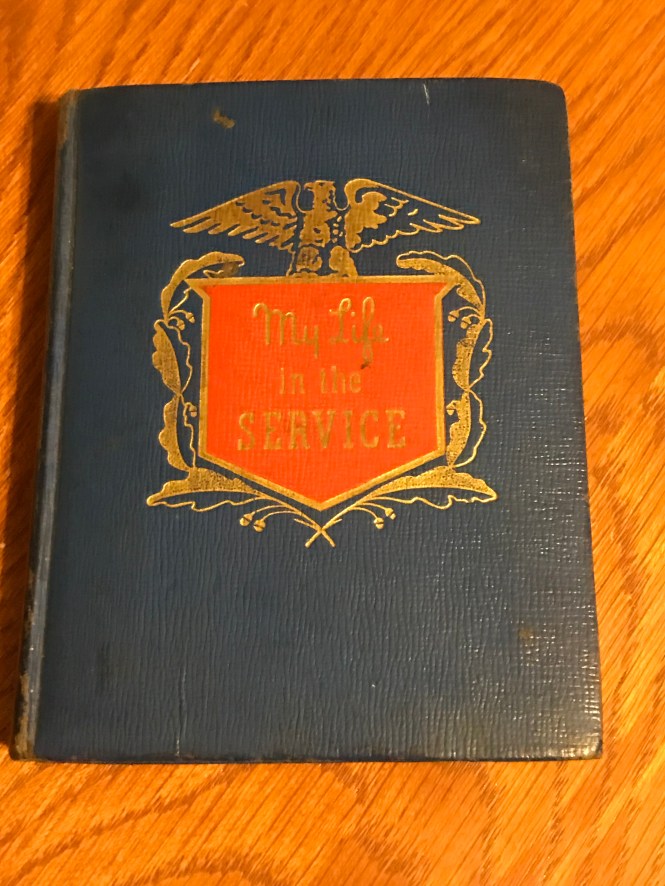
When the world went to war in 1939, ordinary men and women were called to lead extraordinary lives.  Lawrence “Larry” Truman Spencer grew up in the city of Elmira, New York living with his parents Frank and Nellie.  After the war, he returned to Elmira and passed away there on February 21, 2012. [1] But, two things point to the adventures he had during the Second World War and the impact they had on his life.  First, the part of his obituary that read, “He proudly served in the United States Army Air Corps.” [2] Second, he left a diary of his service in a booklet, “My Life in the Service.”

Continue reading

The Lieutenant and the Century Old Challenge Coins

Military challenge coins are among the most treasured and prized recognition a Soldier, Sailor, Airman or Marine can receive. Katie Lange of the Defense Media Activity describes challenge coins as, “an American military tradition for a century, meant to instill unit pride, improve esprit de corps and reward hard work and excellence.” [1] Military challenge coins are steeped in legend and lore, but what is the hard truth behind their origins?

One of my personal favorite stories is that it originated with a Lieutenant in the Army Air Service during the First World War.  I’ve heard two versions of this story, which exists only as an oral tradition.

Continue reading

The Decorated Musician

Cased_Medal

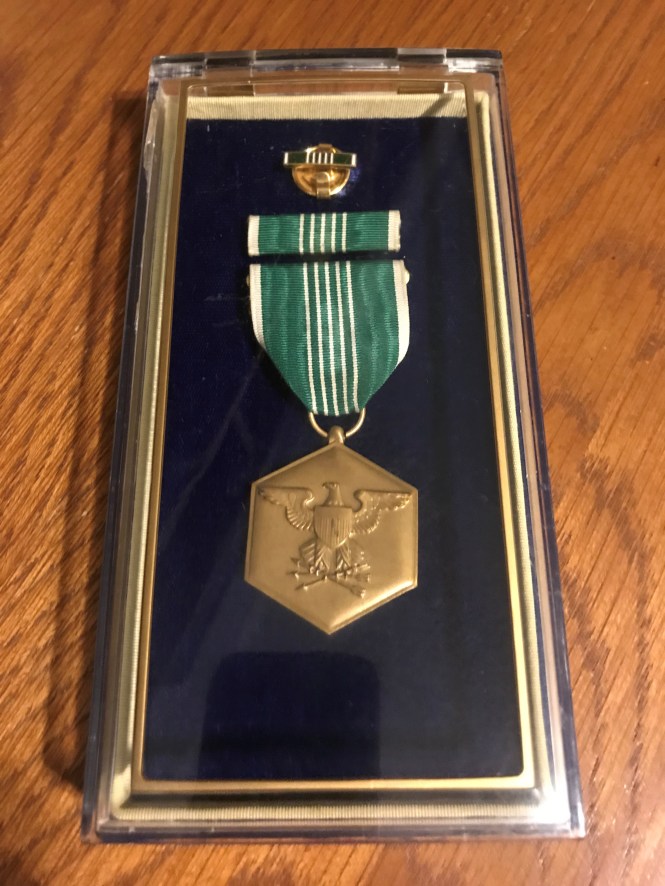
Senior Master Sergeant Cedric V. Smith was presented the Air Force Commendation Medal by Lieutenant General Walter Todd on his retirement after 31 years of military service on August 31, 1960.  But this was not the first time the talented musician who had rose to lead the 604th Air Force Band as Bandmaster. [1] As a Master Sergeant, he was awarded the Army Commendation Medal at an earlier point in his career.*  The military is a cross section of society, and while few civilians would believe the value the military places on musicians, the recognition SMSgt Cedric Smith received is hard evidence against that misconception.

Continue reading

When the Name Tag tells the Bronze Star’s Story

img_6704

The Bronze Star Medal held a nice beautiful chocolate patina and was in a pristine plastic presentation case from the 1950s and 1960s era.  It was eye catching, with the initials D.C.K. engraved on the back.  This would have meant the recipient would have been unknown and lost to time.  Except for the metal U.S. Air Force name tag to D. C. Kipfer with the Warfare Systems School insignia pointed to an exceptional Air Force Colonel’s Service that spanned from World War II through the Vietnam conflict.  What initially looked to be a story of a singular wartime achievement instead told a story of a man whose contributions in Research & Development had greater strategic impact on the United States Air Force.  This is Colonel Donald C. Kipfer’s story of service.

Continue reading

A tipping point in my personal “history”

Today marks 16 years since I took my Oath of Office and accepted a commission as a 2nd Lieutenant in my beloved Air Force.  Today marks the point where I have guaranteed fewer years ahead of me in my career than behind me as I continue the march to retirement.  I took this photograph several months back, to highlight the history of my beloved Air Force.  It brings me comfort to think that I have left my fingerprints on the history of the world, my nation, and my Air Force.

A rich heritage and an even brighter future…..

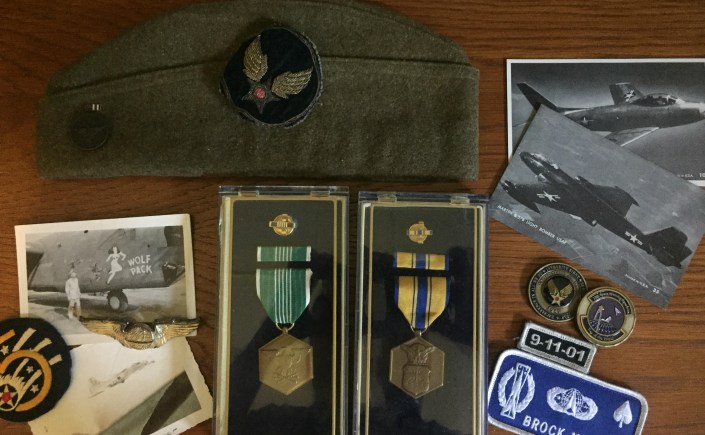
AF History

From bottom left corner, clockwise:

    • World War II Navigator “Wings” and an Australian made 5th Air Force Patch on top of European Theater photographs .
    • Overseas Hat from the immediate Post-World War I era Air Service with a World War II-era Bullion “Hap Arnold” Air Forces Patch (top)
    • 1950s Air Force Post Cards (top right corner)
    • The Airman’s Coin I was presented when I was commissioned with the coin of the 12th Space Warning Squadron (my first assignment.)  The 9/11 memorial tab and flight suit name patch for my time with the 10th Missile Squadron.
    • An Army Commendation Medal awarded to M/Sgt Cedric V. Smith and an Air Force Commendation Medal awarded to Maj Lindon E. Strand.  The clear plastic cases were used in the 1950s and 1960s.


The Medal of Honor Presented on January 19, 1967…..

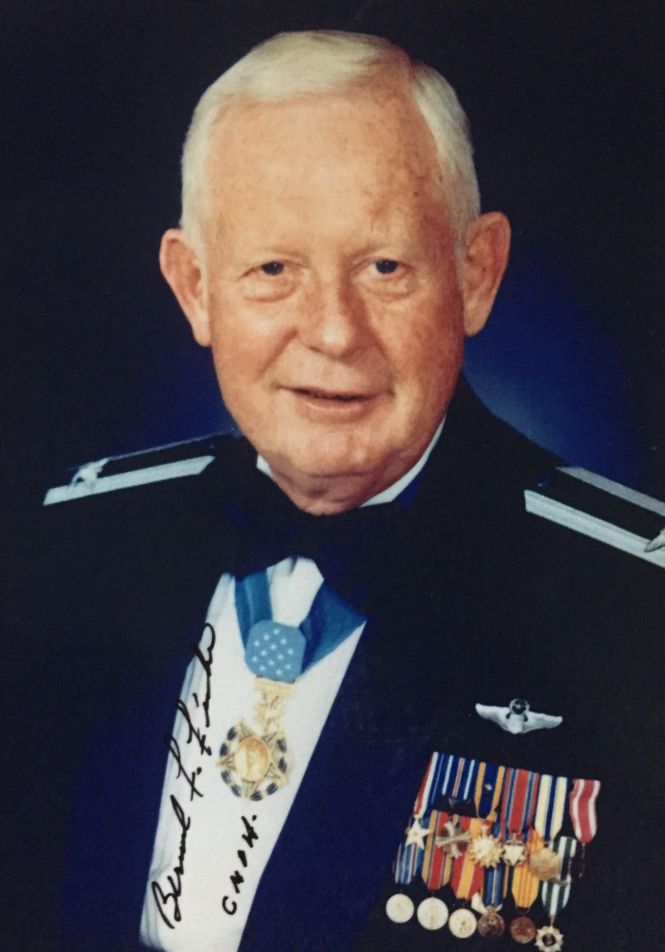
I have recently began collection militaria connected to the Medal of Honor.  I currently have signatures from three recipients in my collection, and my first program from a Medal of Honor ceremony.

The Medal of Honor holds a special place in U.S. military lore, and for good reason.  It is the second oldest U.S. military decoration* and was established when President Abraham Lincoln signed into law the Navy’s Medal of Honor.  Today, there are three distinct designs for the Medal of Honor.  It remains the nation’s highest award for military valor.  These artifacts (pictured below) speak directly to the history of the most recent design, the Medal of Honor awarded by the U.S. Air Force.

B_F_Fisher

Continue reading